Eating with chopsticks or fork at Cherry Blossom's kitchentable... a colorful recipe mix...
August 31, 2009
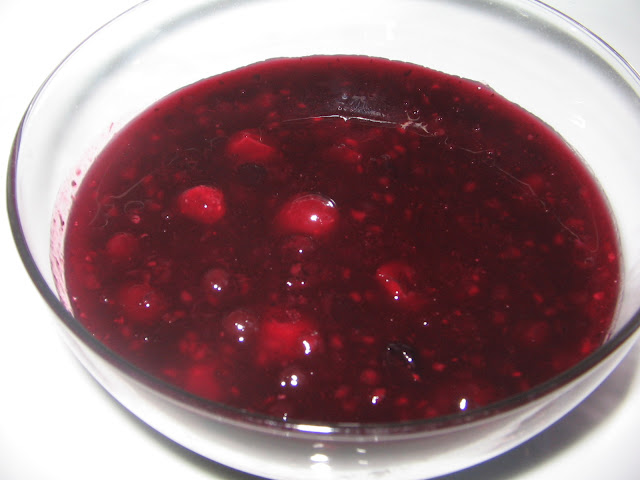
Red Berry Dessert gluten free - Rote Grütze Glutenfrei
Hello
here a family recipe for a wonderfuly refreshing berry dessert - you can just about add any edible black, blue or red berry to as as you please... This is a traditional northern european dish - especially popular in norht Germany, Denmark and Sweden. There are a lot of different recipes and ways to serve this dish ... here is my family recipe that i just twisted to be gluten free. In the original version is made with sago. In respect of my own health and other gluten intolerant members in this family i tried a version with arrowroot powder - works like a charm. You could also use cornstarch or potatostarch or tapioka! In Germany they do also thicken it with ready made vanilla pudding mix.
This really flavorful and teeny weeny bit tart fruit pudding/ sauce is served either with vanilla sauce, ice cream, whipped cream, rice pudding or plain.
Enjoy Alissa
Red Berry Pudding - Red Grits
6 cups fruit (red currant, blueberries, cherries (pitted), raspberries, black currants, black berries) fresh or frozen
1/4 cup water
2 tbsp arrowroot powder (or cornstarch)
1/2 cup sugar
1 shot of brown rum
1 vanilla bean
For fresh berries: stem, wash and dry in collander. For frozen berries: thaw before using.
For a smooth pudding, process berries in a blender, 2 cups at a time, until pureed. For chunkier, process 3 cups, and leave the rest, blending with puree.
Stir arrowroot powder in cold water until smooth.
Combine berries, vanilla and sugar in non-stick saucepan. Bring to a boil over medium heat, stirring constantly. Stir arrowroot mixture again, then add into the berry mixture gradually, while still stirring.
Reduce heat and let simmer for 3 minutes, stirring constantly, until mixture starts to thicken. Remove from heat and stir in the rum.
Pour into a serving bowl, or individual dessert bowls. Cover and chill in the refrigerator for 24 hours. Keeps for about 6 days in the fridge. You can freeze it aswell. Enjoy
Hallo
dies ist ein Familienrezept und eines der Lieblingsfruchtdesserts. Ich habe aus dem traditionellen Rezept eine glutenfreie Version gemacht auf Grund diverser Familienmitgliedern mit einer Glutenunverträglichkeit. Wer lieber das normale Rezept verwenden möchte kann die Pfeilwurzelstärke gegen Sago oder Speisestärke austauschen. Wir hatten lange Jahre ein Ferienhaus in Ostfriesland an der Nordsee und haben im Garten Johannisbeeren und in der Nachbarschaft gab es noch Himbeeren und Kirschen und ich erinnere mich das meine Mutter oft Rote Grütze gekocht hat. Das ar so lecker ganz frisch aus noch sonnenwarmen Beeren. Dazu gabe es frische Sahne direkt vom Bauernhof. Wir hatten immer Glasschalen mit frischer unbehandelter Kuhmilch, die wir in Emaille Kanne vom einem benachtbarten Bauernhof geholt haben, im Kühlschrank und über nacht hatte sich dann immer der Rahm abgesetzt - hmmm war das lecker besonders auch im friesischen Tee. Wir hatten viel viel Spass in unseren Urlauben mit den Nachbarskindern - wir sind durch die Felder gehüpft und an Ostern gabe es ein großes Feuer... es war einwenig wie in Bullerbü ;-)
Heute noch macht meine Mutter immer mal wieder Rote Grütze aus Früchte aus dem Garten oder vom Markt oder TK. Sie ist sehr lecker und ein Familienfavorit. Wir mögen es gerne it Vanille Sauce, Milchreis, Eiscreme oder einfach mit Schlagsahne oder pur
Viel Spass
Alissa
Rote Grütze
etwa 1 Kilo rote Früchte (entsteinte Kirschen, Himbeeren, Blaubeeren, Johannisbeeren, Brombeeren) frisch oder gefroren
1/2 Tasse Zucker
1/4 Tasse Wasser
2 EL Pfeilwurzelstärke (Speisestärke oder Kartoffelstärke oder Sago)
einen Schuß braunen Rum
1 Vanilleschote
Die Früchte putzen , entsteinen, wenn gefroren auftauen lassen. Anschliessend die Hälfte pürieren. Das Püree mit den ganzen Früchten in einem schweren Topf mit dem Zucker und der Vanilleschote aufkochen. In einem Schälchen die Pfeilwurzelstärke mit dem Wasser vermischen und langsam in die Fruchtmasse einrühren. Rühren und eindicken lassen. Ich mag meine rote Grütze nicht so dick und fest ich mag sie eher flüssiger. Sobald sie anzieht vom Herd nehmen, Rum einrühren und abkühlen lassen und anschliessend 24 Std im Kühlschrank aufbewahren. Hält sich bis zu 6 Tagen im Kühlschrank. Es läßt sich auhc prima einfrieren
Labels:
Dessert
August 30, 2009
Steak Diane
Steak Diane
According to the food historians, the true history of Steak Diane is a complicated affair. The answer may be one of semantics rather than straight culinary history. Why? There are as many names for this dish as there are recipe variations. One of the closest variations is Steak au Poivre, also sometimes served flambe.
The history of cooking and serving meat with spiced sauces dates back to ancient times. Sauces were employed to tenderize cuts and add flavour. Pepper was highly favored by Ancient Roman and Medieval cooks and figured prominently in many recipes. According to the Larousse Gastonomique, Sauce Diane (Diana...aka Artemis...a powerful mythological huntress) is traditionally associated with venison (a tough meat), which makes it a curious choice for the finest beef cuts that are used today for Steak Diane.
"Diane, a la
The description "a la Diane" is given to certain game dishes that are dedicated to the goddess Diana (the huntress). Joints of venison a la Diane are sauteed and coated with sauce Diane (a highly peppered sauce with cream and truffles). They are served with chestnut puree and croutons spread with game forcemeat."
---Larousse Gastronomique, Competely Revised and Updated edition [Clarkson Potter:New York] 2001 (p. 416)
"Steak Diane was originally a way of serving venison, and its sharp sauce was intended to complement the sweet flavor of deer meat. It was named for Diana, Roman goddess of the hunt, and since Diana was also the moon goddess, the small pieces of toast used to sop up the delicious juices are traditionally cut in crescent shapes."
---Rare Bits: Unusual Origins of Popular Recipes, Patricia Bunning Stevens [Ohio University Press:Athens OH] 1998 (p. 100)
When was Sauce Diane invented? The earliest mention we find of a sauce with this particular name is 1907, from Escoffier:
"Sauce Diane
Lightly whip 2dl of cream and add it at the last moment to 5dl well seasoned and reduced Sauce Poivrade. Finish with 2 tbs each of small crescent shaped pieces of truffle and hard-boiled white of egg. This sauce is suitable for serving with cutlets, noisettes and other cuts of venison."
---Le Guide Culinaire, A. Escoffier, translated by H. L. Cracknell and R. J. Kaufman recipe 44[1907] (p. 12)
So, when and where did Steak Diane begin? None of the culinary history texts or old cookbooks provide a definative answer. Based on culinary evidence this is a possible explanation:
Steak Diane is an evolution of an ancient dish that was *rediscovered* in the late 19th and early 20th centuries by European chefs.
Evidence suggests Steak Diane is an American invention of the late 1950s/early1960s, when French cooking (think Julia Child - the Kennedy White House menus) was all the rage. Rich wine sauces and flamboyant presentation were the norm for many top restaurants. If Steak Diane is an American recipe, then New York City is the most likely place or origin. Jane Nickerson's article "Steak Worthy of the Name," (New York Times, January 25, 1953 p. SM 32) offers three likely candidates: "The Drake Hotel, the Sherry-Netherland Hotel and the Colony Restaurant each said, not knowing that any other dining place had done so, that their patrons praised their steak Diane. Nino of the Drake claimed he was the first to introduce this dish to New York and, in fact, to the entire United States. Essentially it consists of steak cooked in butter and further seasoned with butter mixed with fresh chives; usually the beef is pounded thin. The chef of each establishment has his own version."
The earliest recipes we find for Steak Diane were printed in Nickerson's article. Craig Claiborne's Steak Diane (New York Times Cookbook [1961]) is not served flambe. Julia Child's The French Chef Cookbook, [1968] contains a recipe for "Steak au Poivre" with optional flambe.
"Steak Diane...I always associated this recipe with New York City's Colony Restaurant because that was where I first tried it. Yet I find no mention of it in "The Colony" [1945], in Brody's portrait of that restaurant. It is featured, however, in Michael Lomonaco's "The 21 Cookbook" [1995] together with this description: "At 21 Steak Diane is traditionally prepared tableside by the captains or Maitre Walter Weiss. The beef, sizzling in a large copper pan with brandy flaming and cause bubbling, makes a wonderful show reminiscent of the days when Humphrey Bogart and friends would bound in at midnight following the newest opening on Broadway..."
---American Century Cookbook: The Most Popular Recipes of the 20th Century, Jean Anderson [Clarkson Potter:New York] 1997 (p. 92)
"He serves stand-bys that the trendy places don't carry. Steak Diane and Bananas Flambe."
Other claims to the origin of Steak Diane (no authentication provided):
"Q: What is Steak Diane, and where did it originate? A: Created at the Copacabana Palace Hotel in Rio de Janiero, individual beef steaks are pounded flat, quickly cooked in butter, and flamed with cognac. The cognac sauce is typically finished with sherry, butter, and chives." --- Minnesota Beef Council
"Rumored to have originated in Belgium during the 1920s, today's recipe has forever left its mark in the minds and pallets of great chefs as one of the most fantastic tales of a meal prepared to change course of unrequited love."
Steak Diane (Colony Restaurant)(1953)
1 to one and one-half tablespoons butter
1/4 teaspoon salt
Freshly gound black pepper to taste
1/2 to one teaspoon each finely chopped chives and parsley
1 teaspoon Worcestershire sauce
Individual steak of any thickness (one pound with bone, eight to ten ounces without bone and fat)
Mix all ingredients except meat in heavy fry pan and when very hot place steak in pan, cooking at very high heat until done. Serve immediately, pouring residue of sauce over meat.
---"Steak Worthy of the Name," Jane Nickerson, The New York Times, January 25, 1953 (p. SM 32)
"Steak Diane, 1 serving (1961)
1 ten-ounce sirloin steak
1 1/2 tablespoon butter
1 tablespoon congnac, heated
2 tablespoons sherry
1 tablespoon sweet butter
1 teaspoon chopped chives.
1. Trim the meat well and pound very thin with a mallet.
2. Heat one and one-half tablespoons butter in a chafing-dish platter. Add the steak and cook quickly, turning it once.
3. Add the congnac and flame. Add the sherry and the sweet butter creamed with chives.
4. Place the steak on a warm platter and pour the pan juices over it."
---The New York Times Cook Book, Craig Claiborne [Harper & Row:New York] 1961 (p. 91)
Source: food history site
----------------------------------------------------------------------------------------------------------------------------------
Hello
i am still working on Cheflys and Appy_Girls recipe review collections and stumbled across several revies from Janie on Steak Diane.... I have been eating asian and italian food for the past weeks that i really felt like a big treat and getting a nice steak ... so the steak diane reviews came just in time - i have to admit i never had one. I know this is a very popular dish in the USA and served many ways as you can also see on the food historian article.
So here is the version i used - its very nice - see above picture thats how i made it - i grilled my steaks rare and 2 medium for the family and served it with potato wedges, a sour cream dip and grilled corn on the cob with parsley butter - it was very very good! Next time i will add the mushrooms - today when i opedn the box with the mushrooms they looked funny so i tossed them...better safe then sorry....
Enjoy Alissa
Steak Diane
Recipe from Jill and reviewed by Janie - thank you both this was terrific!!
2(6-oz.)fillet mignons
Pinch of salt and pepper (i used lemon pepper)
2 Tbs shortning or ghee
1 tsp dijon mustard
2 Tbs shallots minced
1 Tbs shortning or ghee
1 Tbs lemon juice
1-1/2 tsp worchestershire sauce
1 Tbs fresh chives, minced
2 Tsp brandy
1 Tbs fresh parsley, minced
Season both sides of the steaks with salt and pepper. Melt the 2 Tbs butter in a heavy skillet. Add the mustard and shallots, saute over Med heat 1 minute. Add the steaks and cook for about 3 minutes on each side for med-rare.Remove the steaks and keep warm. Add 1 Tbs of butter to the pan drippings, along with the lemon juice and worchestershire sauce and chives. Cook for 2 minutes and add the brandy. Pour the sauce over the steaks and sprinkle with parsley. If you like you could thicken the sauce a bit with corn starch or arrowrootflour.
I made my sauce separetly and left out the mushrooms
Hallo
ich habe in den vergangenen Tage mich durch Berge von Rezepten bzw. Rezeptbewertungen meiner 2 Freundinnen aus dem Amerikanischen Forum gewühlt und einen Thread mit allen ihren besten Bewertungen zusammengestellt und dabei bin ich auf mehrere Versionen des Steak Diane gestossen. Ich persönlich hatte es noch nie gegessen und nur immer wieder in alten amerikanischen Kochbüchern gesehen - es war wohl in den 60'er Jahren sehr populär... besonders wenn es flambiert wurde. Es gehort da einfach zur gehobenen Küche und in jedes bessere Restaurant. Heute erlebt es ein Comback in abgespeckter vereinfachter Form.... Ich habe mich für das Rezept von Jill entschieden. Die Steaks habe ich seperat gegrillt und im Anschluss die Sauce darüber gegeben. Serviert habe ich dazu Kartoffelspalten, Dip dazu, gegrillte Maiskolben mit Butter und einen grünen Salat.
Eventuell gibt es in Deutschland ein ähnliches Rezept... Allerdings kenne ich mich in der deutschen Küche nicht so aus.
Ich finde Steak Diane sehr lecker - die Pilze habe ich bewusst weggelassen da ich die Champignons heute morgen irgendwie muffig fand und komisch - da bin ich radikal - ich schmeisse das dann weg - ich hatte mal eine Lebensmittelvergiftung - da fackel ich nicht lange...
Probiert es mal aus - oder eine älter Version oder Eure eigene.... oder flambiert es das wöre auch schön... ich traut mich das aber nicht in der Wohnung -lol...
Viel Vergnügen..
LG Alissa
Steak Diane
2(6-oz.)Fillet Mignons (ich habe Rumpsteaks verwendet - habe nichts anderes bekommen)
Etwas Salz und Pfeffer (ich habe Lemon Pepper verwendet)
2 EL Butterschmalz oder Ghee
1 TL Dijon Senf
2 EL Schalotten, feingehackt
1 EL Butterschmalz oder Ghee
1 EL Zitronensaft
1-1/2 TL Worchestershire sauce
1 EL Schnittlauch, frisch gehackt
2 EL Brandy
1 EL glatte Petersilie, fein gehackt
Das Steak auf beiden Seiten mit Salz udn Lemon Pepper einmassieren. In einer schweren Pfanne Butterschmalz erhitzen. Den Senf hinzufügen und die Schalotten und 1 Min köcheln lassen. Das Steak hinzufügen und auf jeder Seite 3 Min garen. (med-rare). Die Steaks aus der Pfanne nehmen und warm halten. In die Pfanne 1 EL Ghee geben und mit den Bratresten in der Pfanne verrühren, den Zitronensaft, Worshestershire Sauce und Schnittlauch hinzufügen. Etwa 2 Min köcheln lassen und mit Brand ablöschen. Verrühren einkochen lassen, abschmecken. Wer mag kann die Sauce auch mit Pfeilwurzelstärke etwas andicken. Mit Petersilie bestreuen und mit dem Steak servieren. Man kann dazu auch gebratene Pilze anbieten.
According to the food historians, the true history of Steak Diane is a complicated affair. The answer may be one of semantics rather than straight culinary history. Why? There are as many names for this dish as there are recipe variations. One of the closest variations is Steak au Poivre, also sometimes served flambe.
The history of cooking and serving meat with spiced sauces dates back to ancient times. Sauces were employed to tenderize cuts and add flavour. Pepper was highly favored by Ancient Roman and Medieval cooks and figured prominently in many recipes. According to the Larousse Gastonomique, Sauce Diane (Diana...aka Artemis...a powerful mythological huntress) is traditionally associated with venison (a tough meat), which makes it a curious choice for the finest beef cuts that are used today for Steak Diane.
"Diane, a la
The description "a la Diane" is given to certain game dishes that are dedicated to the goddess Diana (the huntress). Joints of venison a la Diane are sauteed and coated with sauce Diane (a highly peppered sauce with cream and truffles). They are served with chestnut puree and croutons spread with game forcemeat."
---Larousse Gastronomique, Competely Revised and Updated edition [Clarkson Potter:New York] 2001 (p. 416)
"Steak Diane was originally a way of serving venison, and its sharp sauce was intended to complement the sweet flavor of deer meat. It was named for Diana, Roman goddess of the hunt, and since Diana was also the moon goddess, the small pieces of toast used to sop up the delicious juices are traditionally cut in crescent shapes."
---Rare Bits: Unusual Origins of Popular Recipes, Patricia Bunning Stevens [Ohio University Press:Athens OH] 1998 (p. 100)
When was Sauce Diane invented? The earliest mention we find of a sauce with this particular name is 1907, from Escoffier:
"Sauce Diane
Lightly whip 2dl of cream and add it at the last moment to 5dl well seasoned and reduced Sauce Poivrade. Finish with 2 tbs each of small crescent shaped pieces of truffle and hard-boiled white of egg. This sauce is suitable for serving with cutlets, noisettes and other cuts of venison."
---Le Guide Culinaire, A. Escoffier, translated by H. L. Cracknell and R. J. Kaufman recipe 44[1907] (p. 12)
So, when and where did Steak Diane begin? None of the culinary history texts or old cookbooks provide a definative answer. Based on culinary evidence this is a possible explanation:
Steak Diane is an evolution of an ancient dish that was *rediscovered* in the late 19th and early 20th centuries by European chefs.
Evidence suggests Steak Diane is an American invention of the late 1950s/early1960s, when French cooking (think Julia Child - the Kennedy White House menus) was all the rage. Rich wine sauces and flamboyant presentation were the norm for many top restaurants. If Steak Diane is an American recipe, then New York City is the most likely place or origin. Jane Nickerson's article "Steak Worthy of the Name," (New York Times, January 25, 1953 p. SM 32) offers three likely candidates: "The Drake Hotel, the Sherry-Netherland Hotel and the Colony Restaurant each said, not knowing that any other dining place had done so, that their patrons praised their steak Diane. Nino of the Drake claimed he was the first to introduce this dish to New York and, in fact, to the entire United States. Essentially it consists of steak cooked in butter and further seasoned with butter mixed with fresh chives; usually the beef is pounded thin. The chef of each establishment has his own version."
The earliest recipes we find for Steak Diane were printed in Nickerson's article. Craig Claiborne's Steak Diane (New York Times Cookbook [1961]) is not served flambe. Julia Child's The French Chef Cookbook, [1968] contains a recipe for "Steak au Poivre" with optional flambe.
"Steak Diane...I always associated this recipe with New York City's Colony Restaurant because that was where I first tried it. Yet I find no mention of it in "The Colony" [1945], in Brody's portrait of that restaurant. It is featured, however, in Michael Lomonaco's "The 21 Cookbook" [1995] together with this description: "At 21 Steak Diane is traditionally prepared tableside by the captains or Maitre Walter Weiss. The beef, sizzling in a large copper pan with brandy flaming and cause bubbling, makes a wonderful show reminiscent of the days when Humphrey Bogart and friends would bound in at midnight following the newest opening on Broadway..."
---American Century Cookbook: The Most Popular Recipes of the 20th Century, Jean Anderson [Clarkson Potter:New York] 1997 (p. 92)
"He serves stand-bys that the trendy places don't carry. Steak Diane and Bananas Flambe."
Other claims to the origin of Steak Diane (no authentication provided):
"Q: What is Steak Diane, and where did it originate? A: Created at the Copacabana Palace Hotel in Rio de Janiero, individual beef steaks are pounded flat, quickly cooked in butter, and flamed with cognac. The cognac sauce is typically finished with sherry, butter, and chives." --- Minnesota Beef Council
"Rumored to have originated in Belgium during the 1920s, today's recipe has forever left its mark in the minds and pallets of great chefs as one of the most fantastic tales of a meal prepared to change course of unrequited love."
Steak Diane (Colony Restaurant)(1953)
1 to one and one-half tablespoons butter
1/4 teaspoon salt
Freshly gound black pepper to taste
1/2 to one teaspoon each finely chopped chives and parsley
1 teaspoon Worcestershire sauce
Individual steak of any thickness (one pound with bone, eight to ten ounces without bone and fat)
Mix all ingredients except meat in heavy fry pan and when very hot place steak in pan, cooking at very high heat until done. Serve immediately, pouring residue of sauce over meat.
---"Steak Worthy of the Name," Jane Nickerson, The New York Times, January 25, 1953 (p. SM 32)
"Steak Diane, 1 serving (1961)
1 ten-ounce sirloin steak
1 1/2 tablespoon butter
1 tablespoon congnac, heated
2 tablespoons sherry
1 tablespoon sweet butter
1 teaspoon chopped chives.
1. Trim the meat well and pound very thin with a mallet.
2. Heat one and one-half tablespoons butter in a chafing-dish platter. Add the steak and cook quickly, turning it once.
3. Add the congnac and flame. Add the sherry and the sweet butter creamed with chives.
4. Place the steak on a warm platter and pour the pan juices over it."
---The New York Times Cook Book, Craig Claiborne [Harper & Row:New York] 1961 (p. 91)
Source: food history site
----------------------------------------------------------------------------------------------------------------------------------
Hello
i am still working on Cheflys and Appy_Girls recipe review collections and stumbled across several revies from Janie on Steak Diane.... I have been eating asian and italian food for the past weeks that i really felt like a big treat and getting a nice steak ... so the steak diane reviews came just in time - i have to admit i never had one. I know this is a very popular dish in the USA and served many ways as you can also see on the food historian article.
So here is the version i used - its very nice - see above picture thats how i made it - i grilled my steaks rare and 2 medium for the family and served it with potato wedges, a sour cream dip and grilled corn on the cob with parsley butter - it was very very good! Next time i will add the mushrooms - today when i opedn the box with the mushrooms they looked funny so i tossed them...better safe then sorry....
Enjoy Alissa
Steak Diane
Recipe from Jill and reviewed by Janie - thank you both this was terrific!!
2(6-oz.)fillet mignons
Pinch of salt and pepper (i used lemon pepper)
2 Tbs shortning or ghee
1 tsp dijon mustard
2 Tbs shallots minced
1 Tbs shortning or ghee
1 Tbs lemon juice
1-1/2 tsp worchestershire sauce
1 Tbs fresh chives, minced
2 Tsp brandy
1 Tbs fresh parsley, minced
Season both sides of the steaks with salt and pepper. Melt the 2 Tbs butter in a heavy skillet. Add the mustard and shallots, saute over Med heat 1 minute. Add the steaks and cook for about 3 minutes on each side for med-rare.Remove the steaks and keep warm. Add 1 Tbs of butter to the pan drippings, along with the lemon juice and worchestershire sauce and chives. Cook for 2 minutes and add the brandy. Pour the sauce over the steaks and sprinkle with parsley. If you like you could thicken the sauce a bit with corn starch or arrowrootflour.
I made my sauce separetly and left out the mushrooms
Hallo
ich habe in den vergangenen Tage mich durch Berge von Rezepten bzw. Rezeptbewertungen meiner 2 Freundinnen aus dem Amerikanischen Forum gewühlt und einen Thread mit allen ihren besten Bewertungen zusammengestellt und dabei bin ich auf mehrere Versionen des Steak Diane gestossen. Ich persönlich hatte es noch nie gegessen und nur immer wieder in alten amerikanischen Kochbüchern gesehen - es war wohl in den 60'er Jahren sehr populär... besonders wenn es flambiert wurde. Es gehort da einfach zur gehobenen Küche und in jedes bessere Restaurant. Heute erlebt es ein Comback in abgespeckter vereinfachter Form.... Ich habe mich für das Rezept von Jill entschieden. Die Steaks habe ich seperat gegrillt und im Anschluss die Sauce darüber gegeben. Serviert habe ich dazu Kartoffelspalten, Dip dazu, gegrillte Maiskolben mit Butter und einen grünen Salat.
Eventuell gibt es in Deutschland ein ähnliches Rezept... Allerdings kenne ich mich in der deutschen Küche nicht so aus.
Ich finde Steak Diane sehr lecker - die Pilze habe ich bewusst weggelassen da ich die Champignons heute morgen irgendwie muffig fand und komisch - da bin ich radikal - ich schmeisse das dann weg - ich hatte mal eine Lebensmittelvergiftung - da fackel ich nicht lange...
Probiert es mal aus - oder eine älter Version oder Eure eigene.... oder flambiert es das wöre auch schön... ich traut mich das aber nicht in der Wohnung -lol...
Viel Vergnügen..
LG Alissa
Steak Diane
2(6-oz.)Fillet Mignons (ich habe Rumpsteaks verwendet - habe nichts anderes bekommen)
Etwas Salz und Pfeffer (ich habe Lemon Pepper verwendet)
2 EL Butterschmalz oder Ghee
1 TL Dijon Senf
2 EL Schalotten, feingehackt
1 EL Butterschmalz oder Ghee
1 EL Zitronensaft
1-1/2 TL Worchestershire sauce
1 EL Schnittlauch, frisch gehackt
2 EL Brandy
1 EL glatte Petersilie, fein gehackt
Das Steak auf beiden Seiten mit Salz udn Lemon Pepper einmassieren. In einer schweren Pfanne Butterschmalz erhitzen. Den Senf hinzufügen und die Schalotten und 1 Min köcheln lassen. Das Steak hinzufügen und auf jeder Seite 3 Min garen. (med-rare). Die Steaks aus der Pfanne nehmen und warm halten. In die Pfanne 1 EL Ghee geben und mit den Bratresten in der Pfanne verrühren, den Zitronensaft, Worshestershire Sauce und Schnittlauch hinzufügen. Etwa 2 Min köcheln lassen und mit Brand ablöschen. Verrühren einkochen lassen, abschmecken. Wer mag kann die Sauce auch mit Pfeilwurzelstärke etwas andicken. Mit Petersilie bestreuen und mit dem Steak servieren. Man kann dazu auch gebratene Pilze anbieten.
Labels:
main dish
August 29, 2009
Oriental Chickpea Salad - Orientalischer Kichererbsensalat
Hello
its been still quite warm and busy the past days so we keep having light and quick suppers.... yesterday was mezze day with a nice variety of olives from a turkish store, marinated feta cheese, flatbread, tomato salad and this chickpea dish... i don't really have a recipe but here is how it goes...
i use 1 can of chickpeas, rinsed, peeled and drained, 1/2 red bell pepper, 1/2 yellow bell pepper cut in cubes, a big bushel of flat parsley and fresh mint finley chopped, 1 red onion, a bit minced garlic, 1 tsp roasted sesame seeds, a bit preserved lemons chopped finely, olive oil, lemon juice, salt & pepper and a bit turkish chili
mix all together - adust taste.. it should stronly taste of mint and a bit heat from the chili and sourness of the lemon.... the better the olive oil is the better this salad tastes! LEt the salad marinate and sit for at least 1 hour
Enjoy - Alissa
Hallo
die letzten Tage waren wie bei Euch auch eher warm und sommerlich angenehm... allerdings bin ich immer noch sehr beschäftigt und daher fallen meine Abendessen eher leicht und schnell aus.... dies hatten wir gestern ich habe mir beim Türken eine Variation eingelegter Oliven, marinierten Fetakäse mitgenommen sowie ein Fladenbrot... dann habe ich einen Cherry Tomaten Salat gemacht und diesen Kichererbsensalat - den hat ir mal eine türkische Freundin serviert - das Rezept habe ich nie genau erfahren aber ich kriege es annhernd gut hin -lach
Ich verwende 1 Dose Kichererbsen gespült, geschält und abgetropft, 1/2 rote Paprika, 1/2 gelbe Paprika in Würfel geschnitten, 1/2 Bund glatte Petersilie und Minze fein gehackt, 1 rote Zwiebel feingehackt, etwas gerösteten Sesam, türkisches Chili, marikkanisch eingelegte Zitronen fein gehackt, bestes Olivenöl, Zitronensaft Salz und Pfeffer und eine Spur feingehackten Knoblauch
Alles gut vermischen, abschmecken und anpassen. Am besten etwas ziehen lassen im Kühlschrank und bei Zimmertemperatur servieren. Man sollte die Minze deutlich schmecken, die Säure der Zitrone sollte etwas hervorkommen und das Chili sollte es schon abrunden!!
Viel Vergnügen damit...schmeckt auch herrlich zu gegrilltem Lammfleisch
Alissa
Labels:
Appetizer,
middle eastern,
salads,
Sides
August 28, 2009
Grilled Ratatouille Sandwiches
Hello
i often make cheese sandwiches or grilled cheese sandwiches as a quick supper or for lunch. Its done quickly filling and loved by my son. I especially like it next to a steaming mug of tomato soup. Thats how my mom and grandma make it and i continue this. Today i sometimes change the ingredients or fillings... as you can see on the picture this time i added some ratatouille and made it a meal by itself... I play with different kinds of bread and cheeses...The version i made yesterday was swedish rye smorgas bread, thinly sliced camembert and Comte, fried zucchini slices, red onion rings, red and orange pepper, a slice of heirloom tomato, salt, pepper and herbs de provence. I grilled it in a griddle till the cheese was melted and digged in... very nice
Alissa
Cheese Sandwiches
An ungrilled or re-grilled cheese sandwich (which is almost universally spoken of without the "ungrilled" adjective) is the older of the two bold varieties, and also is generally more fundamental, without the possible addition of bacon, tomato and other ingredients that one finds in the case of the grilled cheese sandwich.
The bread, which can take any form—split baguettes are most common in France and Belgium, for example, versus vertically sliced loaf bread in North America and the United Kingdom—is toasted or left untoasted, and filled with Swiss or emmental (popular throughout North America and Europe), Cheddar cheese (the UK and North America), American cheese (North America), brie or camembert (France and Belgium), gouda (the Netherlands and Germany), or any of a vast number of other cheeses. In Europe, especially, the sandwiches can be easily found in bakeries (sometimes with butter spread onto the bread), and also at snack bars and more casual restaurants.
A grilled cheese sandwich is a grilled (actually fried) or broiled sandwich consisting of two slices of bread (usually buttered) with cheese melted in between, sometimes combined with an additional ingredient such as peppers, tomatoes or onions. It is a simple variation on the normal cheese sandwich, and is sometimes known as a cheese sandwich, without any qualification. A variety of different names denote the same sandwich, such as cheese toastie or toasted cheese sandwich; in England and New Zealand it goes by toastie, in Australia it is commonly called a cheese jaffle, and in the Netherlands it is called a tosti. Wikipedia
History
Food historians generally agree that cooked bread and cheese combinations [in many different forms, textures and tastes] were ancient foods known across most continents and cultures. The earliest recipes for food like these are found in Ancient Roman cookbooks. Modern grilled cheese sandwiches descended from these ancient recipes. Who invented the grilled cheese Americans know today? We will never know, but we can (given the ingredients) place it in time. Culinary evidence suggests our modern grilled cheese (consisting of processed cheese and sliced white bread) began in the 1920s. That's when affordable sliced bread and inexpensive American cheese hit the market. Goverment issue cookbooks tell us World War II Navy cooks broiled hundreds of "American cheese filling sandwiches" in ship's kitchens. This makes sense. The sandwich was economical, easy to make, met government nutrition standards AND (if done right?) quite tasty. In the 1940s and 50s these sandwiches were open-faced and usually made with prepackaged grated "American" cheddar cheese. It wasn't long before school cafeterias and other institutional kitchens followed suit. The usual accompaniment? Tomato soup. At that time, tomato soup would have been perceived as a healthy dose of Vitamin C. Excess sodium was not an issue.
By the 1960s, the top piece of bread became standard. The reason is not clear. Possibly? This was the least expensive way to make a popular sandwich more filling.
Some people wonder about the difference between toasted cheese and grilled cheese. Are they the same thing? On the surface, recipes for both produce somewhat similar results (melted cheese nestled between two slices of crisp, warm, buttered bread). Actually? Food historians tell us this a linguistic puzzle. Notes here:
"Toast...is made by placing a slice of bread in front of dry heat-a fire, a grill, or an electric toaster...Certainly, toast has a long history in Britain. Tost was much used in the Middle Ages, being made in the ordinary way at an open fire...Often toast was spread with toppings...Meat toppings for toast became fashionable in during the 16th century...Towards the end of the 16th century all knds of things began to appear on toast....[including] melted cheese."
---Oxford Companion to Food, Alan Davidson [Oxford University Press:Oxford] 1999 (p. 796-7)
"Grill...to cook by direct exposure to radiant heat, as in when a piece of meat is placed on a grill...The North American word for the verb grill is broil."
---ibid (p. 354)
A survey of American cookbooks reveals that recipes titled for "toasted cheese" sandwiches predate those titled "grilled cheese." Grilled cheese shows up in print in the 1960s. BUT!!! It is also apparent that most recipes for toasted cheese sandwiches were broiled (what the English term grill). To further complicate matters, there seems to be little or no relationship between the name of the dish and the instructed method of cookery. Heating methods include toasting in a broiler, baking in a oven and frying on a cooktop with a frying pan, griddle or similar device. It is interesting to note one does not find recipes for "fried cheese sandwiches," even though many of the recipes called for this cooking method. Curious, yes?
Each of these American recipes below would produce something similar (but not exactly) to modern "grilled" cheese sandwiches:
[1902]--Melted Cheese (hot oven)
Mrs. Rorer's New Cook Book, Sarah Tyson Rorer (p. 275)
[1916]--Cheese Dreams (fried in a chafing dish, served with hot tomato or catchup)
Salads, Sandwiches and Chafing Dish Recipes, Marion H. McNeil (p. 23)
[1929]--Toasted Cheese (broiled in the oven)
Seven Hundred Sandwiches, Florence A. Cowles (p. 181)
[1939]--Toasted Sandwiches (broiled in the oven or sauteed in butter in heavy frying pan)
The Boston Cooking School Cook Book, Fannie M. Farmer (p. 719)
[1949]--Toasted Cheese Sandwiches (sauteed in a skillet)
Fireside Cook Book, James A. Beard (p. 152)
[1953]--Waffle or toasted sandwiches (bread & cheese spread heated in a commercial waffle iron, prescribed for the maidless host')
The Joy of Cooking, Irma S. Rombauer (p. 137)
At the Grilled Cheese Invitational cook-off (held annually in Los Angeles), contestants attempt to cook the best grilled cheese sandwich in various categories. The 2008 winner of the Grilled Cheese Invitational "Spaz Trophy" (awarded for overall "weirdness") was the "Cake and Mivens" a dessert grilled cheese sandwich that featured the peeps confectionery.
On November 23, 2004, a grilled cheese sandwich containing a likeness of the Virgin Mary was sold at auction for $28,000.
Preparation
A grilled cheese sandwich can be made in a variety of ways, depending on both the region and personal preference. None of the usual methods utilize an American style grill.
In the United States, the outside of the assembled sandwich is usually buttered before being fried. The sandwich may be cooked with a griddle, pan, or cast iron skillet. When the bottom of the sandwich is golden brown, it is flipped and cooked on the other side.The sandwich is finished when both sides are toasted and the cheese has melted. In an alternative "pan method," butter or oil is first heated in the pan in which the unbuttered sandwich is then cooked.
A second technique is to make the sandwich in a toaster oven. With this method, a slice of cheese is placed on each slice of bread, and the two halves are separately toasted. The sandwich is then carefully combined at the end, with the two separate slices of cheese bonding to hold the sandwich together. A regular oven or a sandwich toaster can also be used. This method is more common in the United Kingdom where the sandwiches are called "toasties."
A Croque-Monsieur
is a hot ham and cheese (typically emmental or gruyère) grilled sandwich. It originated in France as a fast-food snack served in cafés and bars. More elaborate versions come coated in a Mornay or Béchamel sauce. The emergence of the croque-monsieur (and variations) is mirrored by growth in popular fast-foods in other countries.
The name is based on the verb croquer ("to crunch") and the word monsieur ("mister")—the reason behind the combination of the two words is unclear—and is colloquially shortened to croque. While the origins of the croque-monsieur are unknown, there are many speculations on how it was first originated. The croque-monsieur's first recorded appearance on a Parisian café menu was in 1910.[1] Its earliest published use has been traced back to volume two of Proust's Remembrance of Things Past (À la recherche du temps perdu) (1918).Wikipedia
Hallo
ich musszwar vorsichtig mit Milchprodukten sein aber ich komme an einem guten gegrilltem Käsesandwich nicht vorbei. Ich spiele da sehr gerne mit Brotsorten und verschiedenen Käsearten. Grilled Cheese Sandwiches gab es bei uns schon immer meine Oma in Canada hat die gerne zubereitet als ein schnelles Mittagessen und meine Mutter hat das ebenso gehandhabt meist mit einem kräftigen Weißbrot und Gouda oder Cheddar und dan ging das in die Pfanne oder Ofen. Dazu gab es meist eine heiße Portion frische Tomatensuppe. Ich liebe das heute immer noch. Mein Sohn macht sich die mittlerweile selbst - auch gerne im Sandwichtoasteer das macht ihm viel Spass...
Wie Ihr wenn Ihr mögt der History und den weitere Informationen in englisch entnehmen könnt hat Brot und Käse logischerweise eine lange Geschichte und wurde schon von den Römern und wahrscheinlich schon viel früher kombiniert gegessen. Jedes Land hat sich "Sandwiches" oder wie man auch immer es bezeichnen mag.. Panini, Croque Monsieur, Welsh Rarebite.. Grilled Cheese Sandwiches, Käsebrot etc.... Es ist interessant zu verfolgen was da alles kombiniert wird und jedes Land für Traditionen und Begriffe entwickelt hat...
Ich habe gestern mein Sandwich folgendermaßen zubereitet: schwedisches Roggen Smorgas Brot, Comte und Camember fein geschnitten, gebratenen Scheiben Zucchini, rote Zwiebelringe, gebratenen roten und orange Paprikastücke, Tomate, etwas Salz, Pfeffer und Kräuter der Provence.... ich habe die Brotscheiben etwas mit Olivenöl und den Käutern bestrichen die Käsescheiben draufgeben auf beide und in die Mitte das gebratenen Gemüse, etwas Salz Peffer drüber, die zweite Brothälfte mit dem Käse drauf...ab in die heiße Gußeisenpfanne.. einmal wenden und servieren... fertig...
Labels:
Sandwich
August 24, 2009
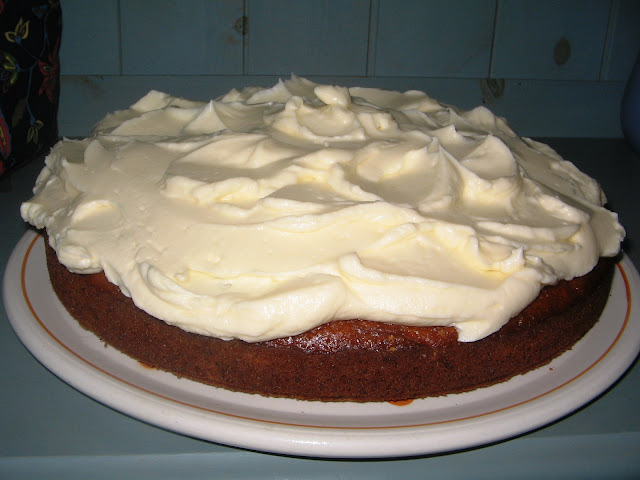
Pineapple Carrot Cake - Ananas Karotten Kuchen
Hello
this is one of my favorit cakes of all times - i have tried many variations and this is a very nice and balanced version of a good carrot cake. I sometimes make 12 cupcakes out of the batter aswell. This cake is really something - i make it for many family get togethers or birthday's... This recipe comes from the internet but i have no idea where i got it from - sorry.... Enjoy Alissa
Carrot Cake History
Carrot cake is a confectionery conundrum: it seems you either love it, or you hate it. But either way, theres no denying the appeal of this rich dessert throughout history. Food historians tell us that the origins of carrot cake were likely a type of carrot pudding enjoyed during medieval times. Later, during the Middle Ages, sweetening agents were hard to come by in Britain and quite expensive, so as a result, carrots were often used in place of sweeteners. Interestingly, despite being such a longstanding mainstay in Europe, American cookbooks didnt start listing carrot cake recipes until the early 1900s. And, it was actually in the 1960s before carrot cake began becoming a more common cake in the United States, soon becoming the dessert of choice at summer family reunions picnics and Mothers Day celebrations.
Most all carrot cake recipes have a core group of ingredients in common, which are flour, sugar, spices (cinnamon, nutmeg, cloves, allspice, salt), baking soda/powder, butter or oil, nuts, and of course carrots. More adventurous bakers have branched out to embrace some rather exotic carrot cake recipes, which feature such ingredients as:
• Pumpkin
• Coconut
• Pureed figs or prunes
• Chocolate chips
• Oranges
• Zucchini
• Crystallized ginger
• Beetroot
• Mashed sweet potatoes
• Papaya
In terms of carrot cake frostings, some people still prefer their carrot cake plain, although you will still see a lot of recipes for the traditional cream-cheese frosting. However, other carrot cake toppings that are delicious can be fondant icing (like on a wedding cake), Greek yogurt, lightly sweetened, buttermilk glaze with a zest of lemon, Royal icing, and chocolate icing.
Carrot cakes have become such a popular treat that there are many bakeries cropping up in America that specialize in making this vegetable-filled creation. As a result of this popularity, there are many carrot cake experts out there who are sharing their tidbits and secrets for making the very best kinds of carrot cakes. A sampling of those secrets includes:
• The amount of carrots you put into a carrot cake recipe will affect both the texture and taste of the cake.
• Using pureed carrots as opposed to shredding raw carrots will give your carrot cake a much more moist consistency.
• Use oil instead of butter - it will be MUCH moister than if you used butter.
• Use the zest of one orange in the batter for a zippier consistency.
These days, carrot cake-flavored treats come in such varieties as carrot cake latte, carrot cake ice cream, and even carrot cake flavored treats for dogs! Clearly carrot cakes whether made healthy with low fat ingredients, or made gooey with lots of rich ingredients are a crown jewel in the cake family that can finish off any meal in royal style!
(http://ezinearticles.com/?A-Rich-History-of-the-Carrot-Cake&id=1581606)
Pineapple Carrot Cake
3 cups unbleached all-purpose flour (i use spelt)
2 cups sugar
1 teaspoon salt
1 Tbsp baking soda
1 Tbsp cinnamon
1 1/2 cups olive oil or vegetable oil
4 large eggs, lightly beaten
1 Tbsp vanilla extract
1 1/2 cups shelled walnuts, chopped (more whole or chopped for topping)
1 1/2 cups sweetened, shredded coconut
2 cups of finely grated carrots
1 cup of drained crushed pineapple
Frosting:
8 oz cream cheese, at room temperature
6 Tbsp unsalted butter, room temp
2 1/2 cups of confectioners' sugar
1 teaspoon vanilla extract
2 Tbsp lemon juice
Preheat oven to 350°F. Butter two 9 inch cake pans. Cut out rounds of wax paper and place at bottoms of cake pans. Butter the top of the wax paper rounds.
Sift dry ingredients into a bowl. Add oil, eggs, and vanilla. Beat well. Fold in chopped walnuts, coconut, carrots and pineapple.
Pour batter into pans. Set on the middle rack of oven and bake for 45-50 minutes (shift positions of cakes front-to-back if necessary about halfway through), until edges have pulled away from sides and a toothpick or sharp knife tip inserted into the center of the cake comes out clean. Cool on a cake rack.
To prepare frosting, cream together the cream cheese and butter in a mixing bowl. Slowly sift in the confectioners sugar and beat until mixture is free of lumps. Stir in vanilla and lemon juice.
Once cakes have cooled, frost. Sprinkle top with chopped walnuts or arrange walnut halves in a crown around the top.
Serves 12-16.
Hallo
hier ein Rezept meines Lieblingskarottenkuchens. Über die Jahre habe ich so viele Versionen ausprobiert - in amerikanischen Kochbüchern gibt es ja eine unendliche Vielfalt dieses beliebten Kuchens! Er ist auch ein typisches Dessert. In den USA und Kanada wird oftmals ein Kuchen einem cremigen Dessert vorgezogen. Ich wünsche euch viel Spass damit - er ist unglaublich saftig und würzig und nicht so süß - besonders wenn man die Creme wegläßt!
Alissa
Ananas Karotten Kuchen/b>
3 Tassen Mehl (ich verwende Dinkel)
2 Tassen Zucker
1 TL Salz
1 EL Natron
1 EL Zimt ( ich verwende Saigon)
1 1/2 Tassen Olivenöl oder Pflanzenöl
4 große Eier, leicht verquirlt
1 EL Vanille
1 1/2 Tasse gehackte Walnüsse
1 1/2 Tasse gesüßte Kokosraspeln oder normale Kokosraspeln
2 Tassen Karotten, fein gerieben
1 Tasse Ananasstückchen aus der Dose, abgetropft (keine frische Ananas das macht den Kuchen bitter)
Glasur:
1 Packung Frischkäse, zimmertemperatur
6 EL Butter, zimmertemepratur
2 1/2 Tassen Puderzucker
1 TL Vanilleextrakt
2 EL Zitronensaft
Den Backofen auf 170°vorheizen. Eine Springform aus fetten oder mit Backpapier auslegen.
Die trockenen Zutaten in einer Schüssel vermischen. In der anderen Schüssel die nassen Zutaten vermischen mit der Ananas, Karotte und Kokosnus. Zusammen mischen und in die Backform geben und 45 Min backen. Komplett auskühlen lassen
Für die Glasur alle Zutaten zu einer ebenmäßigen kmpenfreien Masse mixen und auf den Kuchen verteilen
Eventuell mit kandierten Orangenschale und Nüssen dekorieren oder Marzipan Möhren.
Den Kuchen dekoriert kühl aufbewahren. Man kann den Kuchen auch vorbacken und am Tag des Verzehrs dekorieren !
Labels:
Cake
Snapshots of my Birthday party - Schnappschüsse meiner Geburtstagsparty
Cherry Blossom Birthday - Cherry Blossom Geburtstag


These are just a few snapshots of the korean food i made for my family birthday get together.... recipes will follow this week!
Hier ein paar Schnappschüsse meines koreanischen Essens das ich für meine Familie gestern zu meinem Geburtstag gekocht habe ... ich habe den tisch ganz bewusst etwas kitschig und simple dekoriert.. das ist ein Familienscherz - da wir einen ähnlich dekorierten Tisch - noch schlichter mit Plastikblumen etc in einem Chinarestaurant vor vielen Jahren mal hatten... Das habe ich aufgegriffen....
Leider konnte ich nicht alles fotografieren ...
Es gab als Vorspeise Kimbap (koreanische Reisrollen), Krabbenchips, Shrimp & vegetarische Teigtaschen. Hauptgetrichte: Chapchae (gebratene Nudeln), Tofu, gebratener Reis, glasiertes Hühnchen, scharfe Chicken wings, Reis, Gemüsepfanne und diverse Saucen... Dessert tropischer Obstsalat
Typische Kaffeetafel bei Familienfesten... dieses Mal gabe es Käsekuchen, Karottenkuchen mit Cream Cheese Frosting, Zwetschgenkuchen, Mandelhörnchen, Nussecken und Chocolate Chip Cookies...
All recipes and more information will be provided during the next days.....
Alle Rezepte und nähere Angaben folgend die nächsten Tage
Cheers Alissa
These are just a few snapshots of the korean food i made for my family birthday get together.... recipes will follow this week!
Hier ein paar Schnappschüsse meines koreanischen Essens das ich für meine Familie gestern zu meinem Geburtstag gekocht habe ... ich habe den tisch ganz bewusst etwas kitschig und simple dekoriert.. das ist ein Familienscherz - da wir einen ähnlich dekorierten Tisch - noch schlichter mit Plastikblumen etc in einem Chinarestaurant vor vielen Jahren mal hatten... Das habe ich aufgegriffen....
Leider konnte ich nicht alles fotografieren ...
Es gab als Vorspeise Kimbap (koreanische Reisrollen), Krabbenchips, Shrimp & vegetarische Teigtaschen. Hauptgetrichte: Chapchae (gebratene Nudeln), Tofu, gebratener Reis, glasiertes Hühnchen, scharfe Chicken wings, Reis, Gemüsepfanne und diverse Saucen... Dessert tropischer Obstsalat
A typical german coffeetable.... we had carrot cake, plum streusel cake, german cheesecake, nut triangles, marzipan cresents, couble cocolate cookies.....
Typische Kaffeetafel bei Familienfesten... dieses Mal gabe es Käsekuchen, Karottenkuchen mit Cream Cheese Frosting, Zwetschgenkuchen, Mandelhörnchen, Nussecken und Chocolate Chip Cookies...
All recipes and more information will be provided during the next days.....
Alle Rezepte und nähere Angaben folgend die nächsten Tage
Cheers Alissa
Labels:
Party
August 20, 2009
Almond Flan - Pudín de Almendras - Mandelflan
Hello
here is a recipe for a traditional spanish almond flan or pudding. I have made that a few days ago and served it with fresh berries - is a nice change to your typical vanilla flan or creme caramel... i really enjoyed this nutty little dessert!
Alissa
Spanish Almond Flan
6 servings
3 tbsp sugar
1 tbsp water
200g sugar
100 g ground almonds
peel of one lemon, grated
1/2 liter milk
4 eggs
dash of salt
1 tbsp roasted almond slivers for decoration
Preparation
- In a 22cm(9inch) baking pan, caramelize the sugar and water over low heat. When the sugar turns golden, remove from the heat and coat the bottom of the pan with the caramel.
- In a small pot heat the milk on low and add sugar and stir till sugar is dissolved. Add the ground almonds and let come to a boil, remove from stove and let stand 15Min.
Beat the eggs foamy and add lemon peel and cinnamon, salt and add to the milk. Mix well and let sit another 10 Min.
Preheat the oven to 350°.
- Pour the mixture into the caramelized baking pan, and place in a larger pan containing one inch of water. Bake at 180C° (350F°) for about one hour until top is set and golden. Remove pan from the water and allow to cool.
- Place a serving plate over pan and flip over. Remove the pan. Chill at least 2-3 hour before serving.
- Serve fresh fruit.
Pudín de Almanderas - Mandelflan aus Spanien
schmeckt besonders gut zu frischen Beeren oder Fruchtstücken... ein Originalrezeot aus Andalusien. Ich mag es besonders gerne weil es nussig cremig ist ohne so schwer im Magen zu liegen... sehr lecker.
Alissa
200g Zucker
1 Bio Zitrone
1/2 l Milch
100 g gemahlene Mandeln
4 Eier
1/2 TL Zimt
eine Prise Salz
1 EL geröstete Mandelblätter
In einem Topf 3 EL Zucker mit 1 TL Wasser bei schwacher Hitze in eine Tartefrom bei schwacher Hitze karamellisieren. Beiseite stellen.
Die Milch erwärmen, den restlichen Zucker hinzufügen und rühren bis er aufgelöst ist . Die Mandeln dazugeben aufkochen lassen und 15 Min stehen lassen.
Die Eier schaumig schlagen, mit Zitronenschale und Zimt unter die Milch rühren. Noch einaml 10 Min stehen lassen.
Den Backofen auf 180 ° vorheizen. Eine tiefe Fettpfanne mit heißem Wasser füllen, so dass die Form mindstens bis zur Hälfte im Wasser steht und in den Ofen schieben. Die Masse in die Form auf das Karamell füllen. Im Wasserbad im Ofen 40 Min garen.
Abkühlen lassen un dim Kühlschrank 2-3 Std kalt stellen. Vor dem Servieren stürzen un dmit gerösteten Mandelblättchen garnieren.
Labels:
Dessert
August 16, 2009
Puchero de Verano - Andalusische Gemüseeintopf
Hallo
ich lese gerade ein schönes Kochbuch über Andalusien und bin über dieses Rezept gestolpert - Sommerlicher Gemüseeintopf aus Cordoba. Dieses Gericht ist super lecker und zart würzig! Die ganze Familie hat es super genossen und mit der Würzer der scharfen spanischen Wurst und der süße der Birnen und dem Kürbis wird ein tolles Aroma erreicht...Eigentlich gehören da noch Auberginen rein - die mag ich aber nicht im Eintopf - daher habe ich sie weggelassen.
Das ist mein Beitrag zum diesmonatigen Garten-Koch-Event mit dem Thema "Bohnen".
Liebe Grüße
Alissa
Zubereitungszeit 45 Minuten
6 Personen
Puchero de Verano - Andalusischer Gemüseeintopf
250 g Kichererbsen entweder gekocht oder aus der Dose
500 g Kartoffeln
250 g Kürbis (ich habe Hokkaido verwendet)
500 g grüne Bohnen
4 sehr feste Birnen
Salz
1 rote Zwiebel
1 reife Fleischtomate
3 EL Olivenöl
3 Zweige Pfefferminze
2 Zweige glatte Petersilie
1 Briefchen Safranpulver (ich habe Fäden verwendet)
1 TL Paprika, edelsüß
frisch gemahlenen Pfeffer
1 pikante Chorizo Wurst (muss man nicht)
Kichererbsen in ein Sieb gießen und abspülen, abtropfen lassen, Kartoffeln und Kürbis schälen und in 3 cm große Würfel schneiden. Bohnen waschen, putzen, in 2-3 lange Stücke schneiden. Die Birnen vierteln, vom Kerngehäuse befreien und in Stücke schneiden, 1 Liter Wasser aufkochen lassen, leicht salzen. Das Gemüse und die Birnen darin bei mittlerer Hitze etwa 10 Min garen.
In der Zwischenzeit für das Sofrito die Zwiebeln schälen und fein hacken. Tomate waschen, häuten, entkernen und klein schneiden. In einer Pfanne das Öl erhitzen, darin die Zwiebel anschwitzen, die Tomaten dazugeben und 4 Min schmoren. Minze und Petersilie waschen, trockentupfen, die Blätter in eine Chiffonade schneiden. Mit Safran und Paprika unter das Sofrito mischen und 1 Min mitschmoren.
Das Sofrito zum Eintopf geben. Mit Salz und Pfeffer würzen, zugedeckt bei schwacher Hitze 10-15 Min köcheln lassen. Das Gemüse darf nicht zu weich sein. Wer mag kann noch Chorizo hinzufügen!
Heiß servieren und dazu schönes Fladenbrot oder rustikales Baguette servieren
August 14, 2009
Yak Sik - Korean Cake - Koreanischer Kuchen
Hellothis was my birthday party 17 years ago when i was living in South Korea. My wonderful sweet first hostmother made this terrific meal for my friends and myself. She was really something! In the middle you see a traditional korean birthday cake Yak-Shik (medicin cake). She made mine with an old family recipe and decorated it with pinenuts. We really enjoyed that feast and terrific very special meal. I was there only 4 weeks when my host mom already did this for me - that was very nice and special - i will always thank her deeply for that. This cake is very flavorful and cinnamony with dried fruits and just a little bit sweet - i enjoyed it so much. Enjoy Alissa

Yaksik or yakbap (literally "medicinal food" or "medicinal rice") is a variety of tteok or Korean rice cake made by steaming glutinous rice, and mixing with chestnuts, jujubes, and pine nuts. It is seasoned with honey or brown sugar, sesame oil soy sauce, and sometimes cinnamon. It has been traditionally eaten on Jeongwol Daeboreum (정월대보름), a Korean traditional holiday which falls on every 15th of January in the lunar calendar.
Yak-Shik or Yak-Sick
3 1/3 cup glutinous rice
1 lb chestnuts
5 oz dates or jujube (korean red dried dates)
3 1/2 tbl sesame oil
1 tsp cinnamon
5 oz raisins
1/4 cup honey
2 tbl pine nuts
SEASONING MIXTURE
3 tbl soy sauce
1/2 cup dark brown sugar
1 1/2 cup Sugar
Wash glutinous rice and soak in water for overnight.
Shell chestnuts and cut into halves.
Wash and pit dates, and cut into 2 or 3 pieces.
Drain rice, and place in a steamer basket.
Make a hole in the center of rice.
Steam over high heat about 30 minutes until cooked.
Sprinkle with 1/2 cup water during steaming.
Transfer rice to a large bowl.
Add Seasoning Mixture to the hot rice and mix well.
Add sesame oil and cinnamon, and mix thoroughly once more.
Gently stir in the Raisins, dates and chestnuts.
Place the bowl of rice pudding in the steamer and steam about 5 hours until chestnuts are cooked.
Add more boiling water as needed.
Sprinkle with honey and mix while steaming.
Sprinkle with pine nuts before turning off heat.
The hot steamed rice pudding can be packed into a round cake pan, unmold and cut into pieces before placing on serving dish.

Hallo
das Bild oben zeigt mich an meinem 20. Geburtstag kurz nach meiner Ankunft in Korea. Meine süße erste Gastmutter war so unendlich großzügig und erlaubte mit ein paar meiner Freunde einzuladen und hat mir dieses köstliche Essen zubereitet. In der Mitte des Tisches steht mein Reiskuchen verziehrt mit Pinienkernen. Es ist ein typisch koreanischer Medizinkuchen mit Jujube (koreanischen roten Datteln), Kastanien und Rosinen und Zimt. Er ist sehr lecker!! Der heisst Medizinkuchen weil Yak= Medizin und Sik= Essen, die Koreaner vertreten die Ansicht das Medizin und Nahrung aus den gleichen Quellen stammen. Daher entspricht Yaksik der traditionellen Philisophie es ist eine nahrhafte Speise die verspricht den Körper zu stärken und zu heilen.

Übrigens die koreanische Schrift ist übrigens sehr leicht zulesen da sie über ein genauso kurzes Alphabet verfügen wie wir... Koreanisch kann man bis zu einem gewissen Grad sehr gut lernen - ab dann ist Ehrgeiz und Übung gefragt aber es ist nicht so schwierig wie japanisch und kantonesisch oder mandarin.
Viel Spass mit dem Rezept
Alissa
Yak-Shik or Yak-Sick
3 1/2 Tassen Klebreis
1 Pfund Kastanien
1/2 Pfund koreanische Datteln (Jujube) oder normale Datteln
3 1/2 EL Sesamöl
1 Tl Zimt
1/2 Pfund Rosinen
1/4 Tasse Honig
2 EL Pinienkerne
3 EL Sojasauce
1/2 Tasse braunen Zucker
1 1/2 Tasse Zucker
Den Reis waschen und über Nacht einweichen lassen.
Die Kastanien halbieren.
Die Datteln waschen und entkernen und dritteln.
Den Reis abtropfen lassen und in einen Dämpfeinsatz oder Dampfkocher, Reiskocher geben.
Ein Loch in die Mitte des Reisberges it einem Löffelstiel machen.
Über heißem Dampf 30 min dämpfen lassen.
Mit 1/2 Tasse wasser besprenkeln während des Dämpfens.
Den Reis in eine große Schüssel geben.
Alle Zutaten vorsichtig unterrühren und sehr gut mischen.
Den Reis wieder in den Reiskocher, Dampfgarer oder in den Dämpfeinsatz geben und 5 Stunden dämpfen bis die Kastanien gar sind oder weniger dämpfen wenn man vorgegarte Kastanien verwendet!.
Bitte nicht vergessen Wasser nachfüllen damit es gleichmäßig dämpft.
Zwischendurch mit Honig beträufeln und immer wieder mal durchmischen während des Dämpfens.
Am Schluss mit Pinienkernen bestreuen und die Hitze abstellen.
Den heißen Reispudding in einem mit Sesamöl eingefettete Form geben und komplet auskühlen lassen und in kleinen Stücken servieren.
August 12, 2009
Korean Rice Cakes - Koreanisches Reisgebäck

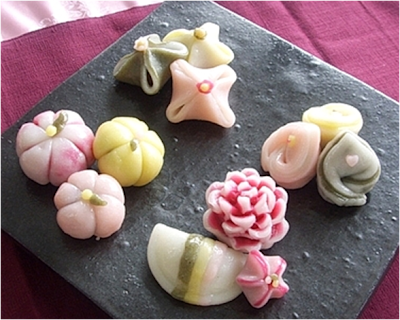
Tteok - Korean Rice Cakes
Hello,
the past few weeks i haven't had much time for favorit and most relaxing hobby i have - cooking or baking. So what can i add to my blog?? I love my little blog and so decided to add stories and food history toward it when i have no time to prepare and review something myself... Here is a tribute to the world of korean steamed sweet rice cakes.... at first i didn't like them very much - comming from europe with pastries and candies so very sweet and different to this falvor... but after a while i got used to it and in the end loved it and now crave them. I tried to make them myself very often with not the same success as in korea with my host family... i guess i just haven't got the righ trecipe or technique. Anyway they are adorable and come in many shapes these days back when i was in Korea in teh early 90's they were colorful but mainly in simple shapes... or at least i hadn't seen the others...Once in a blue moon i go to Frankfurt to a korean supermarket and get myself some of these little gems... If you ever come across them give them a try!! Enjoy Alissa

they are mainly done in this shape or coloring!

Tteok (Korean pronunciation: [t͈ʌk]; also spelled ddeock, duk, dduk, ddeog, or thuck) is Korean cake made with glutinous rice flour (also known as sweet rice or chapssal), by steaming. Normal rice flour can be used for some kinds of tteok. There are hundreds of different kinds of tteok eaten year round. In Korea it is customary to eat tteok guk (tteok soup) on New Year's Day and sweet tteok at weddings and on birthdays. It is often considered a celebratory food and can range from rather elaborate versions with nuts and fruits down to the plain-flavored tteok used in home cooking. Some common ingredients for many kinds of tteok are mung bean, red bean, and sweet red bean paste, Korean mugwort, jujube and other dried fruits, sesame seeds and oil, sugar, and pine nuts.
Tteok are largely divided into four categories, such as "steamed tteok" (찌는 떡, 甑餠), "pounded tteok" (치는 떡, 搗餠), "boiled tteok" (삶는 떡 搗餠) and "pan-fried tteok" (지지는 떡 油煎餠). The steamed tteok is made by steaming rice or glutinous rice flour in "siru" (시루), or a large earthenware steamer, so it is often called "sirutteok" (시루떡). It is regarded as the basic and oldest form of tteok. The pounded tteok is made by using a pounding board or mortar after steamed first. In making pan-fried tteok, the rice dough is flattened like a pancake and pan-fried with vegetable oil. The shaped tteok are made by kneading a dough with hot water which is usually shaped into balls. Wikipedia

The pictures i have take from korean websites!
Hallo
die letzten Wochen bin ich sehr beschäftigt gewesen und hatte leider überhaupt nicht genug Zeit für meine Lieblingshobby das Kochen und Backen. Aber da ich meinen kleinen Blog nicht vernächlässigen möchte habe ich mich entschieden anstelle Rezepte auch mal einfach nur kleine Geschichten und Historie einzufügen. Dieser Beitrag widme ich den koreanischen Reiskuchen. Diese wunderschön geformten und farbenfrohen kleinen Köstlichkeiten waren zu Beginn für mich sehr gewöhnungsbedürftig - sie haben nach nicht viel geschmeckt für einen europäischen Gaumen... aber mit der Zeit wurden sie immer leckerer und spannender für mich und vor meiner Abreise war ich süchtig -lol... Heute gönne ich sie mir ab und zu wenn ich nach Frankfurt komme und in einen koreanischen Supermarkt gehe - war lange nichtmehr da udn weiss gar nicht ob es die überhaupt noch gibt. Ich habe versucht sie hier in Deutschland selber zu machen aber mir fehlt eindeutig die Übung und ein Lehrer der mir das eibrigt mit der richtigen Konsistenz etc... aber eventuell lernen ich es ja noch selbst... Wenn Ihr mal auf Reisen oder in einem koreanischen Restaurant darauf stoßt - versucht es mal - es ist ungewohnt aber gerade für Dessertverweigerer und Menschen die Süßigkeiten nicht mögen eine tolle Variante!
Liebe Grüße Alissa
Süße Desserts werden fast ausschließlich an Festtagen gegessen. Nudeln sind ein typisches Geburtstagsgericht, weil sie als Symbol für langes Leben gelten. Zur Wintersonnenwende wird ein Brei aus roten Bohnen (팥죽, patjuk) mit süßen Reisbällchen (경단, gyeongdan) serviert, um die Geister zu vertreiben. Zum ersten Geburtstag eines Kindes gibt es farbige Reiskuchen (무지개 떡, mujigae tteok). Das Neujahrsfest wird mit Reiskuchensuppe (떡국, tteokguk) gefeiert. Die Gestaltung der Speisen spielt in der traditionellen koreanischen Küche und vor allem an Festtagen eine große Rolle. Zum Einfärben werden üblicherweise Eigelb, Eiweiß, Wasserkresse, Chili und schwarze Pilze verwendet.Ein Sprichwort in Korea besagt, dass eine Frau, die schöne Reiskuchen formen kann, hübsche Kinder zur Welt bringt. Der Tteok (Reiskuchen) ist der vielleicht älteste koreanische Snack, dessen Ursprünge bis in das zweite Jahrhundert n. Chr. zurückreichen. Im Gegensatz zu dem in Europa üblichen Gebäck verwendet man bei der Herstellung von Tteok als Basis statt Getreidemehl gemahlenen Reis. Der Reiskuchen, dem ausschließlich natürliche Zutaten wie Nüsse, Kürbis, Pinienkerne oder Zitronen beigefügt werden, ist in mehr als 300 verschiedenen Geschmacksvarianten erhältlich. Die Hauptstadt Seoul verfügt über eine Vielzahl von Tteokläden, in denen man diese typischen Leckereien kosten und deren traditionelle Herstellung beobachten kann. Die liebevoll verzierten Produkte, die auch bei ausländischen Touristen sehr beliebt sind, eignen sich, in hübschen Päckchen verpackt, besonders gut als kulinarisches Souvenir. Das Reisgebäck hat in Korea eine besondere Bedeutung. Kindern wird beispielsweise bis zum 10. Lebensjahr Tteok geschenkt, da man glaubt, dies würde die Gesundheit und das Schicksal der Kleinen positiv beeinflussen. Die sogenannten „Bok-tteok“ (Glückstteok), die von vielen Reiskuchenläden angeboten werden, sind in den Universitätsvierteln kurz vor Beginn der Prüfungsperiode nahezu ausverkauft.
August 10, 2009
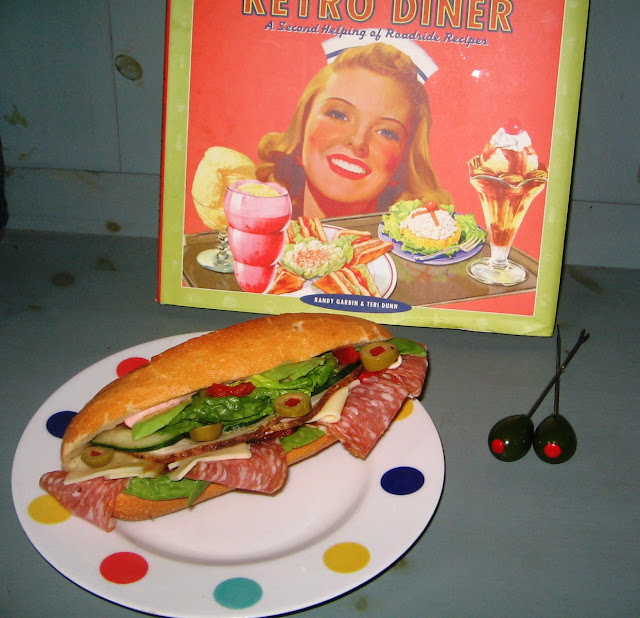
Mini Submarine
Submarine Sandwich
A submarine sandwich, also known as a sub, grinder, hero, hoagie, Italian sandwich, po' boy, wedge, zep, torpedo or roll, is a popular Italian American sandwich that consists of an oblong roll, often of Italian or French bread, split lengthwise either into two pieces or opened in a "V" on one side, and filled with various meats, cheeses, vegetables, spices, and sauces. The sandwich has no apparent generic name, and major US cities have their own names for it. The usage of the several terms varies regionally but not in any pattern, as they have been used variously by the people and enterprises who make and sell them. The terms submarine and sub are widespread and not assignable to any certain region, though many of the localized terms are clustered in the northeast United States, where the most Italian Americans live

The sandwich originated in several different Italian American communities in the Northeastern United States from the late 19th to mid 20th centuries. The popularity of this Italian-American cuisine has grown from its origins in Pennsylvania, New York, New Jersey, and Massachusetts to spread to most parts of the United States, and with the advent of chain restaurants, is now available in many parts of the world. In Europe this would simply be known as a Baguette, or a Ciabatta, named after the type of bread being used. Both types of bread are traditional breads in use in France and Italy for centuries.
Submarine
The use of the term submarine or sub is widespread, and its origin is disputed. One theory is that it originated in a restaurant in Scollay Square in Boston, Massachusetts at the beginning of World War I. The sandwich was created to entice the large numbers of navy servicemen stationed at the Charlestown Navy Yard. The bread was a smaller specially baked baguette intended to resemble the hull of the submarines it was named after.

Another theory suggests the submarine sandwich was brought to the US by Dominic Conti (1874–1954), an Italian immigrant who came to New York in the early 1900s. In 1910 he started Dominic Conti's Grocery Store on Mill Street in Paterson, NJ and named the sandwich after seeing the recovered 1878 submarine called "Holland 1" in the local Paterson museum in 1918. His granddaughter has stated the following: "My grandfather came to this country circa 1895 from Montella, Italy. Around 1910, he started his grocery store, called Dominic Conti's Grocery Store, on Mill Street in Paterson, New Jersey where he was selling the traditional Italian sandwiches. His sandwiches were made from a recipe he brought with him from Italy which consisted of a long crust roll, filled with cold cuts, topped with lettuce, tomatoes, peppers, onions, oil, vinegar, Italian herbs and spices, salt, and pepper. The sandwich started with a layer of cheese and ended with a layer of cheese (this was so the bread wouldn’t get soggy)."[6]
Common recipe
All varieties of this sandwich use an oblong bread roll as opposed to sliced bread.
Submarine sandwich based on a Ciabatta. The traditional sandwich usually includes a variety of Italian luncheon meats, including dry Genoa salami, mortadella, thin sliced pepperoni, capocollo or prosciutto, and provolone cheese served with lettuce, tomato, onions, and peppers with an olive oil dressing. American bologna is sometimes used in place of mortadella and ham is often substituted for capicola, with prosciutto frequently omitted. Many locations that provide catering services also offer very large 3-foot and 6-foot "Giant" sandwiches.
Popularity and availability
From its origins with the Italian American labor force in the Northeast, the sandwich began to show up on the menus of local pizzerias. As time went on and popularity grew small restaurants called Hoagie shops and Sub shops began to open that specialized in the sandwich.
After WWII Italian food grew in popularity in the US and started to become assimilated. This brought the use of other meats to the sandwich including turkey, roast beef, American and Swiss cheese, as well as spreads such as mayonnaise and mustard.
“ "Pizzerias may have been among the first Italian-American eateries, but even at the turn of the century distinctions were clear-cut as to what constituted a true ristorante. To be merely a pizza-maker was to be at the bottom of the culinary and social scale; so many pizzeria owners began offering other dishes, including the hero sandwich (also, depending on the region of the United States, called a 'wedge,' a 'hoagie,' a 'sub,' or a 'grinder') made on a Italian loaf of bread with lots of salami, cheese, and peppers."—America Eats Out, John Mariani [Morrow:New York] 1991 (p. 66) ”
By the late 20th century, due to the rise of large chain restaurants, the sandwich became available in most regions of the US as well as many parts of the world including Africa, Asia, Oceania, the Caribbean, Europe, the Middle East, and South America. Major multi-national chains that serve subs include Subway and Quiznos, with other regional American chains including Charley's Grilled Subs, Blimpie, Jimmy John's, Planet Sub, Potbelly's, Tubby's, Schlotzsky's and D'Angelo Sandwich Shops. The sandwich is also available from several supermarkets and convenience stores.
Hello
i keep having these retro food cravings and as i am speding a lot of time with old fashioned american cookbooks form Betty Crocker and Co i craved a good old submarine sandwich... to my sons pleasure i made som really corny ones tonight..... so here is how i made mine..I made the miniature version today Enjoy Alissa
Miniature Submarien Sandwiches
4 Miniature Baguette
Mortadella
Italian Salami
Italian Ham
Pork Roast slices
Provolone Cheese
Tomato slices
Cucumber Slices
Avocado Slices
Lettuce
Olives filled with pimento, slices
Red Onion, slices
Salt & pepper
Butter
Turn bread top-side down. Make a lengthwise cut down center of loaf from one end to other, being careful not to cut through top side. Spread bread apart carefully; hollow it out, leaving about 1/2-inch thick shell. (The bread removed from the center can be dried and used for bread crumbs).
Spread bottom half with butter. Layer lettuce, salami and tomatoes on buttered bread: season with salt & pepper. Layer cheese, ham,, roast, cucumber and onion, avocado (sprinkle with salt) and top with mortadella and then tomatoes. Spread top half with mustard. Press closs and secure with picks or small skewers. Serve

Hallo
ich habe immer mal wieder so Retro Phasen und beschäftige mich mit Rezepten aus den
50', 60' 70' Jahren der amerikanischen Küche. Schaue mir da gerne die alten Kochbücher mit den kitschigen Bildern an und diese Abbildungen in den klassischen Farben dieser Zeit vermitteln mir ein heimeliges und wohliges Gefühl. Ich kenne diese Bilder auswendig und habe sie oft als Kind angeschaut. Ich verwende besonders gerne die Kuchen und Appetizer Rezepte dieser Bücher aber auch gerne mal den einen oder anderen Braten. Die Angaben damals waren super präzise und es sind alles Schulkochbücher oder Betty Crocker Werke die immer funktionieren. Betty Crocker ist wie bei uns Dr. Oetker. Über die Jahre habe ich auf Flohmärkten und antike Buchhandlungen oder Ebay USA einige sehr alte tolle Kochbücher erstanden.
Heute Abend war mir nach typisch amerikanischen Submarine Sandwiches, zur großen Freude meines Sohnes, wir machen diese ab und zu. Früher habe ich die oft gemacht aus riesigen dicken Baguetts, schön kräftig gefüllt besonders zu WM Fussball Abenden. In den USA wir ein Submarien gerne in der Football Saison serviert.
Es gibt auch sehr elegante Versionen mit Geflügel- oder Hummersalat und toll dekoriert für Parties. Heute habe ich sie so gemacht. Viel Spass damit ~ Alissa
Mini Subarine Sandwiches
Mortadella
Italian Salami
Italian Ham
Pork Roast slices
Provolone Cheese
Tomato slices
Cucumber Slices
Avocado Slices
Lettuce
Olives filled with pimento, slices
Red Onion, slices
Salt & pepper
Butter
Turn bread top-side down. Make a lengthwise cut down center of loaf from one end to other, being careful not to cut through top side. Spread bread apart carefully; hollow it out, leaving about 1/2-inch thick shell. (The bread removed from the center can be dried and used for bread crumbs).
Spread bottom half with butter. Layer lettuce, salami and tomatoes on buttered bread: season with salt & pepper. Layer cheese, ham,, roast, cucumber and onion, avocado (sprinkle with salt) and top with mortadella and then tomatoes. Spread top half with mustard. Press closs and secure with picks or small skewers. Serve

Hallo
ich habe immer mal wieder so Retro Phasen und beschäftige mich mit Rezepten aus den
50', 60' 70' Jahren der amerikanischen Küche. Schaue mir da gerne die alten Kochbücher mit den kitschigen Bildern an und diese Abbildungen in den klassischen Farben dieser Zeit vermitteln mir ein heimeliges und wohliges Gefühl. Ich kenne diese Bilder auswendig und habe sie oft als Kind angeschaut. Ich verwende besonders gerne die Kuchen und Appetizer Rezepte dieser Bücher aber auch gerne mal den einen oder anderen Braten. Die Angaben damals waren super präzise und es sind alles Schulkochbücher oder Betty Crocker Werke die immer funktionieren. Betty Crocker ist wie bei uns Dr. Oetker. Über die Jahre habe ich auf Flohmärkten und antike Buchhandlungen oder Ebay USA einige sehr alte tolle Kochbücher erstanden.
Heute Abend war mir nach typisch amerikanischen Submarine Sandwiches, zur großen Freude meines Sohnes, wir machen diese ab und zu. Früher habe ich die oft gemacht aus riesigen dicken Baguetts, schön kräftig gefüllt besonders zu WM Fussball Abenden. In den USA wir ein Submarien gerne in der Football Saison serviert.
Es gibt auch sehr elegante Versionen mit Geflügel- oder Hummersalat und toll dekoriert für Parties. Heute habe ich sie so gemacht. Viel Spass damit ~ Alissa
Mini Subarine Sandwiches
4 Baguettebrötchen
Mortadella
Italienische Salami
Italinischer Schinken
Schweinbraten Scheiben
Provolone Käse
Tomaten Scheiben
Gurke Scheiben
Avocado Streifen
Romanosalat
Gefüllte Olivenscheibchen
Rote Zwiebel Scheiben
S&P
Butter
Das Baguette längs Durchschneiden aber nicht komplett - sonder wie einen schmetterling. Leicht auseinanderdrücken und etwas von dem Brot rauspulen.
Die Unterseite (innen) mit Butter bestreichen und mit Salat, Salami und Tomaten belegen. Die Tomaten Salzen und Pfeffern. Nun weiter mit Käse Layer cheese,Schinken, Braten, Gurke, Avocado und Zwiebeln belegen.Die Oberseite innen mit Senf bestreichen auf die Zwiebeln Mortadella, Tomaten und Salat legen. Das Baguett schliessen und mit Spiessen zusammenhalten und anscheiden und in Stücken servieren.
Subscribe to:
Posts (Atom)